Alright, today it’s time to review Xiaomi’s gaming giant, the Redmi K90 Max. This phone had awesome sales records in China, selling 90,000 units in just its first week of release.
This phone doesn’t just have a super-fast cooling fan inside; that fan is also bigger than any other phone’s in the world. It’s even bigger than the fans in gaming phones from Asus and ZTE. This phone is truly a gaming giant.
Design & Build Quality
When I first held the Redmi K90 Max, its design reminded me of the K90 Pro Max, which I reviewed for you a little while ago. It really uses the same DNA, meaning it has a huge camera island at the top of the body that gives it a really unique and different feel. But there’s a big difference here.
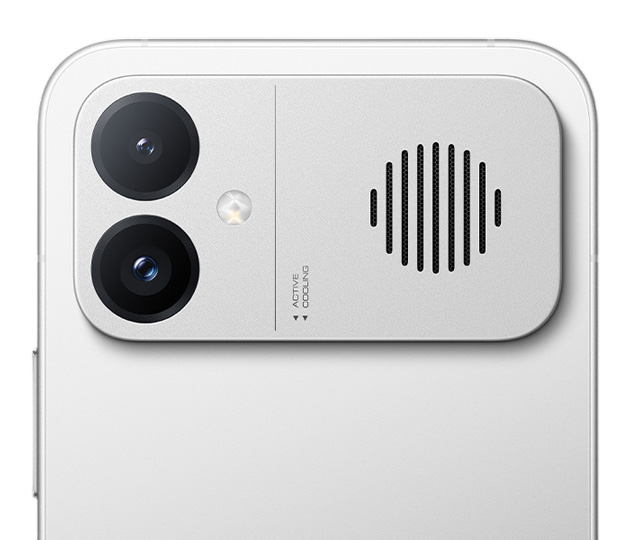
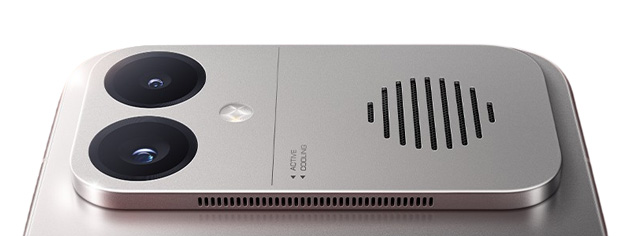
On the K90 Max, there’s no telephoto camera or subwoofer anymore. Instead, Xiaomi dedicated that space to an active cooling system. This system includes a big fan along with a large heatsink. Just keep that in mind for now, because I’m going to talk all about how its cooling system performs later on.
The phone is a bit of a handful due to its massive 6.83-inch display. It’s definitely not a phone that most people, especially those with normal or small hands, can use easily with one hand. Its 8.1mm thickness and 227 gram weight also put the K90 Max in the category of large and fairly heavy phones on the market.
As for materials, you should know you’re dealing with a high-end phone. The combination of an aluminum frame and a fiberglass back panel makes it feel like a premium, high-quality phone when you hold it.
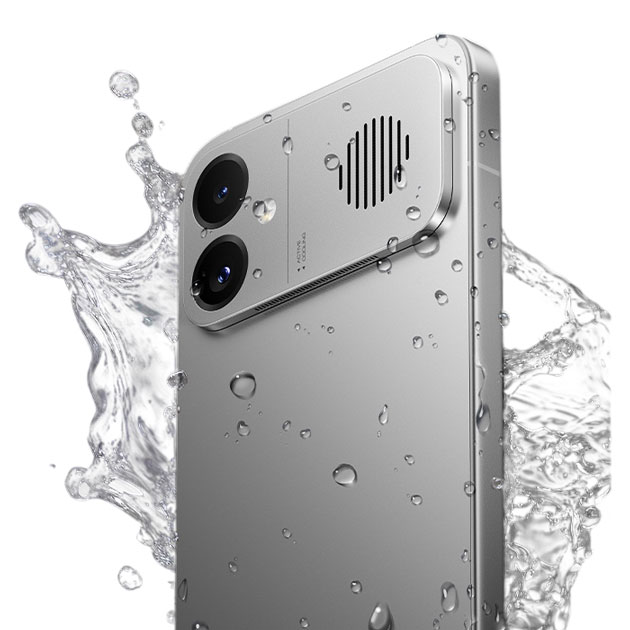
But maybe the most interesting part of the K90 Max’s design is that despite all the holes and vents for the active cooling system, the phone still supports various IP66, IP68, and even IP69 Rating. That’s a really impressive point for a phone equipped with a cooling fan.
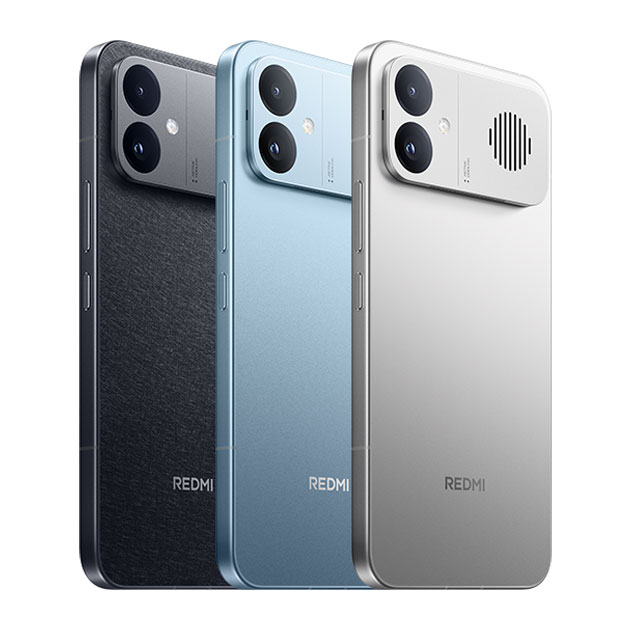
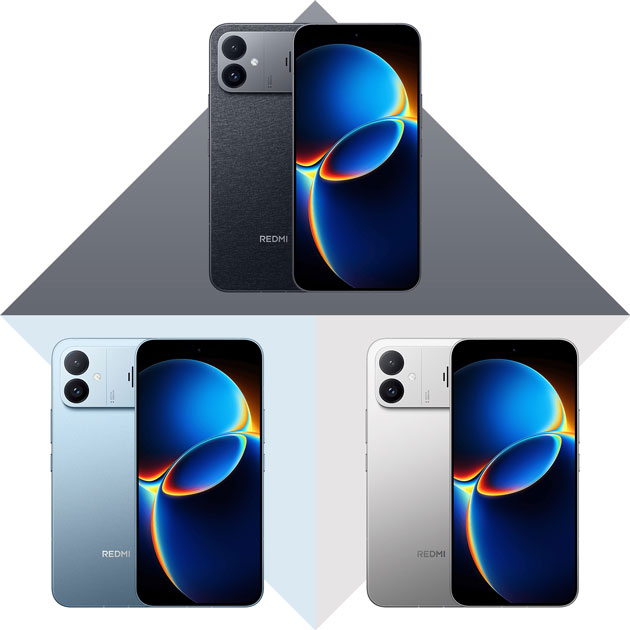
You can buy the Redmi K90 Max in three colors: Black, Blue, and Silver. The black one has a really beautiful pattern on it.
Display & Audio

Okay, let’s talk about the display, which is where the Redmi K90 Max really tries to prove itself as a top-tier gaming phone. Xiaomi used a 6.83-inch LTPS AMOLED panel with a 1.5K resolution. This 1.5K resolution is the perfect sweet spot; it gives you super high image quality without putting as much strain on the processor and battery as a 2K panel would.

But the most important feature of this screen is without a doubt its 165Hz refresh rate. The K90 Max natively supports more than 40 games at 165fps. This means if the phone’s hardware can deliver the necessary output, you’ll get an absolutely amazing experience with it.

The touch sampling rate here is also insane. The normal touch sampling is 480Hz, and in instant mode, it hits 3500Hz. That can give you incredibly fast responsiveness, especially in competitive games.

But this display isn’t just focused on image quality and speed; Xiaomi also put a lot of effort into eye protection. The K90 Max uses the new generation of eye protection technologies called Green Mountain Eye Protection 3.0. This includes a hardware-level blue light filter, full DC dimming to reduce screen flicker, and circular polarized light technology. This all helps to reduce eye strain during long gaming sessions. In fact, Xiaomi even got high-level TÜV Rheinland and CQC certifications for this.
Guys, the Redmi K90 Max’s display has everything a professional gamer needs. What Xiaomi really focused on here is super-fast response time and not tiring your eyes during long periods of use.
Speakers
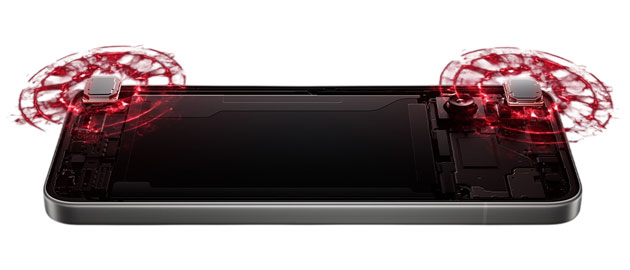
Since this is a gaming phone, Xiaomi did something pretty cool with its speakers. The K90 Max uses a stereo setup. The speakers are made by a company called Goertek, and they’re the 1115X model, which is part of their flagship series. These speakers use a full cavity design and are made with N-Base reinforcing materials.
A great thing here is that both the top and bottom speakers are the same model, and they’ve been tuned by Bose. On top of that, these speakers support Dolby Atmos, which can be a huge help in games when you’re trying to hear footsteps.

Now, we’ve heard these speakers before in the Xiaomi 17 Ultra. Besides having very high volume, they also have incredible quality, and the best part is that the bass doesn’t fade away even at high volumes.
Battery & Charger
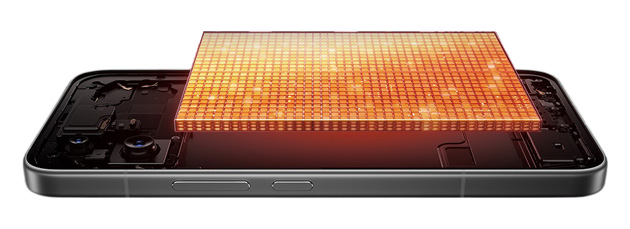
Xiaomi packed a massive 8550mAh silicon-carbon battery into the Redmi K90 Max. They managed to reach this capacity by injecting 16% silicon into it.
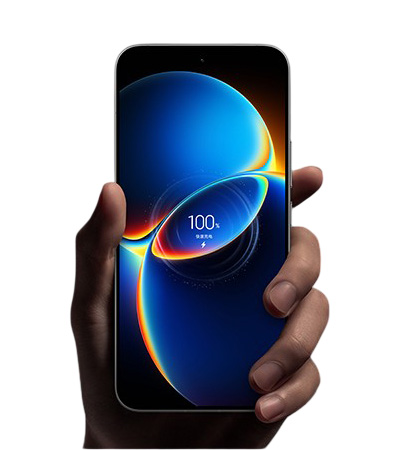
In the box, there’s a 100W charger that fully charges the battery in less than an hour. But an important feature in gaming phones, which the K90 Max also has, is battery bypass. When you turn this on, the power needed by the phone’s components is drawn directly from the charger, and the battery is taken out of the circuit.
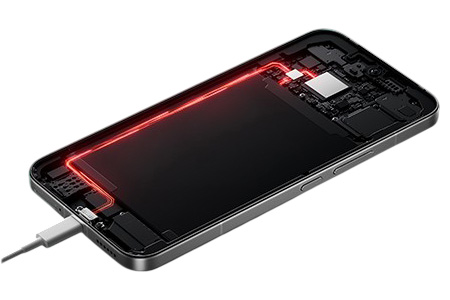
I have to say, this phone’s battery is really exciting. Considering its capacity and charging speed, it shows that you’ll never be left short on battery.
Performance
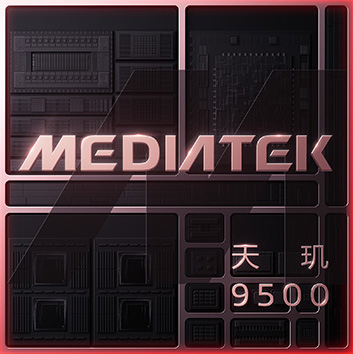
Xiaomi used the MediaTek Dimensity 9500 in the Redmi K90 Max, which is currently MediaTek’s flagship chipset. And you should know that this chip just swallows the Snapdragon 8 Elite Gen 5 when it comes to graphics; it’s that powerful.
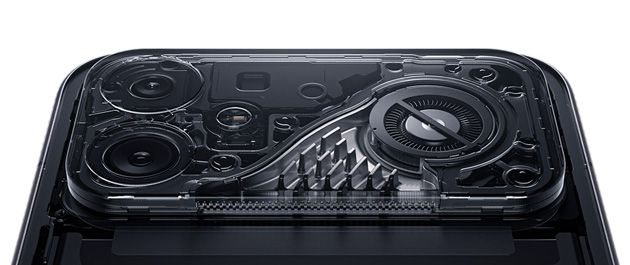
Alongside this powerful chipset, Xiaomi has used a very advanced cooling system for the K90 Max. This system is made up of two parts: a passive part with multiple layers and thermal gels, and an active part that includes a very large heatsink and fan.
It might be interesting to know that the active part of this cooling system is bigger than all other phones with a similar setup, like the Honor Win, iQOO 15 Ultra, and even the ZTE RedMagic 11 Pro.
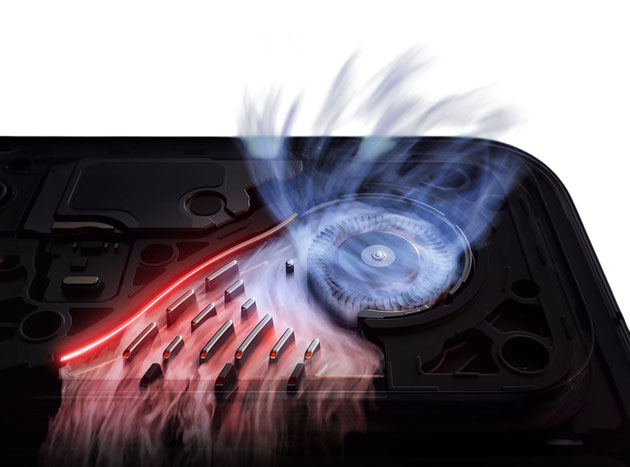
The way it works is it pulls in a large volume of cool air from the front, blows it over the heatsink with its many fins, and pushes the hot air out from the bottom part of the camera island.
So what memory options are available? The Redmi K90 Max is released in five models: 12GB+256GB, 12GB+512GB, 16GB+256GB, 16GB+512GB, and 16GB+1TB. The price goes up to 4699 yuan, which is about $700 if we convert it.
Camera
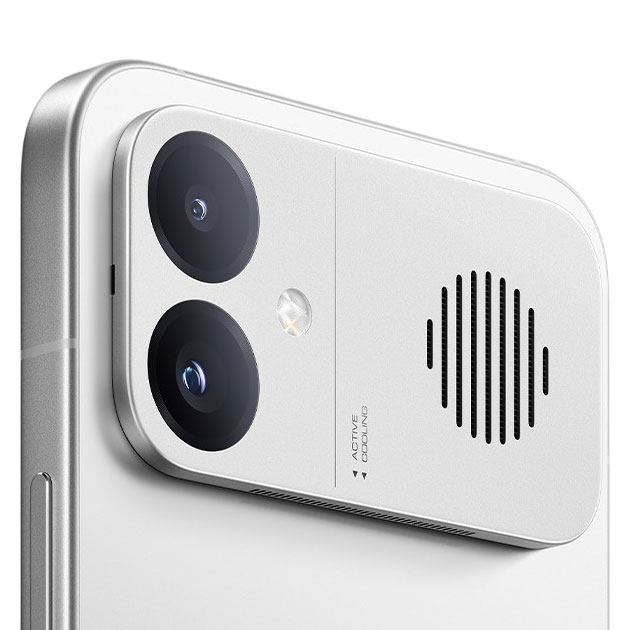
Alright, the K90 Max isn’t super well-equipped in this department. The phone has a 50MP main camera with a Light Hunter 800 sensor. Its ultrawide camera is an 8MP sensor made by Galaxy Core, and the selfie camera is a 20MP OV20 sensor from OmniVision.
Guys, the Redmi K90 Max’s camera setup is like this: it has a selfie camera that’ll get the job done. It also has an ultrawide camera that you shouldn’t count on too much. I think Xiaomi just put it there to create some harmony on the back of the phone.
The main camera, which has a good aperture and optical image stabilization, will take good photos and videos for you during the day in my opinion. At night and in low light, its photos and videos are somewhat acceptable. Overall, you shouldn’t have high expectations for this phone’s camera.