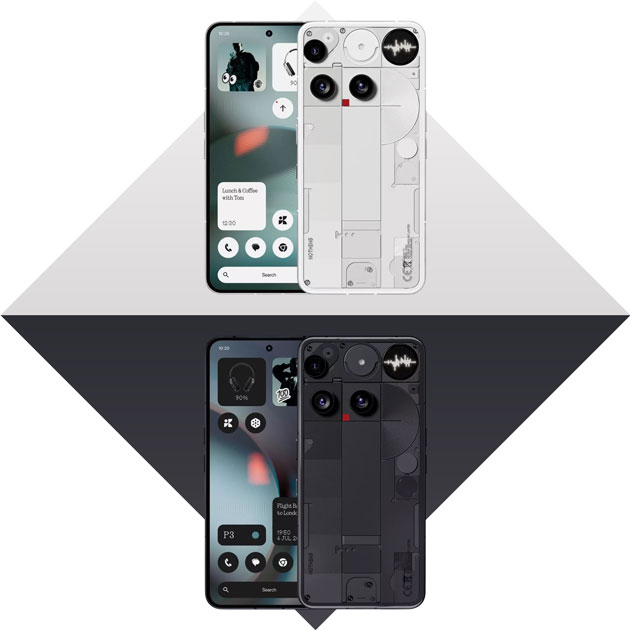
Finally, I got my hands on the Nothing Phone (3), which is Nothing’s flagship and arguably the most unique phone of 2025, to review for you guys. When I look at its design, I honestly can’t help but wonder what was going on inside the designer’s head! In this review, I’m going to share my experience with you in full detail.
Design & Build: Weird but Premium
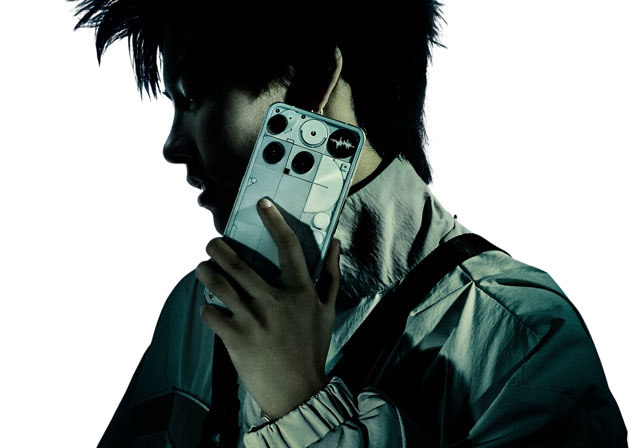
When I pulled the Nothing Phone (3) out of the box, I got two completely opposite vibes. First, the design is so unique and different that you won’t find any obvious harmony in it. It’s exactly this weirdness that makes it a total eye-catcher, and anyone who sees it will automatically ask what model it is.
But my second impression was the exact opposite because the build quality is absolutely incredible! The combination of aluminum and glass, along with Nothing’s signature pattern, makes it feel like a luxury flagship to the touch, even with your eyes closed.
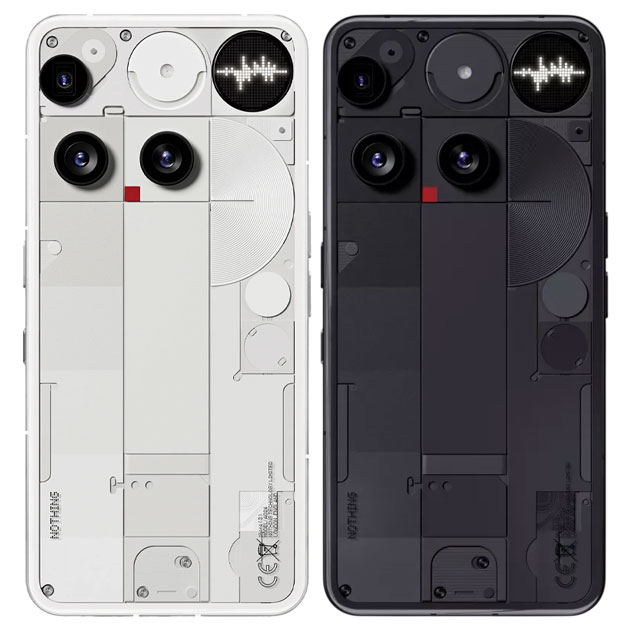
The back panel is made of flat Gorilla Glass Victus. You can get it in White and Black, and the one I’ve got in my hand right now is white. The great thing about it is that it doesn’t show fingerprints and smudges too badly. It gets dirty, sure, but it hides it well.
The camera section is just as chaotic as ever because the lenses are scattered around with no organized or classic layout. The main wide camera bump is pretty big, but since it’s not sitting inside a unified camera island, it doesn’t bother you at all during daily use.
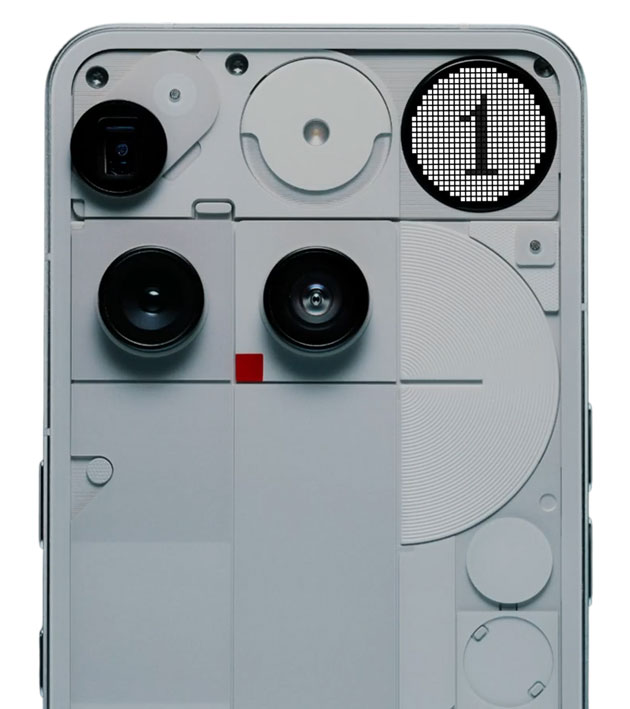
But the biggest change compared to before is the removal of Nothing’s famous LED strips. Instead, they’ve replaced them with a display featuring 489 LEDs that Nothing calls the Glyph Matrix.
Right below it, there’s a capacitive touch button that you can press to interact with this display and change its look. To be honest, this rear display isn’t all that practical, and you really have to mess around with it a lot to get used to checking the time or notifications there. For me, it felt more like a gimmicky feature than a necessity.
Below the cameras, they’ve also placed a tiny red LED that blinks during video recording, which is a cool throwback to old-school video cameras. The design follows Nothing’s signature philosophy of grabbing attention, even at the cost of looking cluttered.
The phone’s frame is matte, aluminum, and completely flat, which means it can easily stand upright on a flat surface. Thanks to the very subtle curvature of the edges, it doesn’t dig into your hand at all when you hold it.
On the left side of the frame, you’ll find the volume buttons, and their placement is a bit awkward because your hand accidentally hits them all the time, though you get used to it after a while.
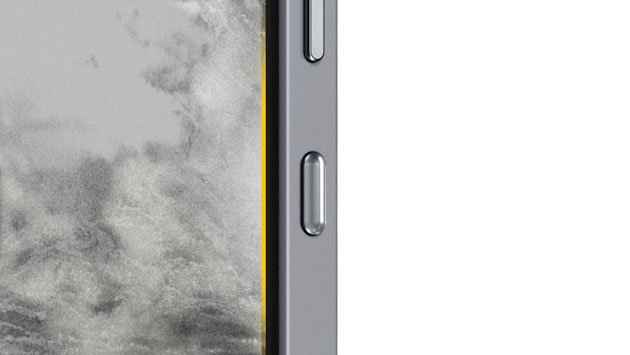
The right side houses the power button and the Essential Space button. The power button is in a good spot, but the other one is right under your fingers that you’ll accidentally trigger it quite often.
The bottom of the phone holds the speaker, Type-C port, SIM tray, and microphone, while the top features the secondary microphone and the second speaker output.
Moving to the front, you’re looking at a flat glass panel with Gorilla Glass 7i protection. The flat screen is awesome because you don’t have to worry about finding a screen protector, but the downside is that swiping on it doesn’t feel very smooth or user-friendly. The selfie punch-hole is located at the top of the screen.
The optical fingerprint sensor is embedded under the display. It’s placed a bit too low, which can mess with the phone’s balance in your hand when you try to reach it, but its performance is great and I didn’t have any issues with it.

Finally, it comes with an IP68 rating, so you’re totally safe from water and dust. Personally, I couldn’t really vibe with the design because it’s a matter of taste, and you can’t really call it ugly or beautiful, but the materials are top-notch. Still, it would’ve been much better if it had an IP69 rating like some of its competitors.
Display: Unbelievably Disappointing!
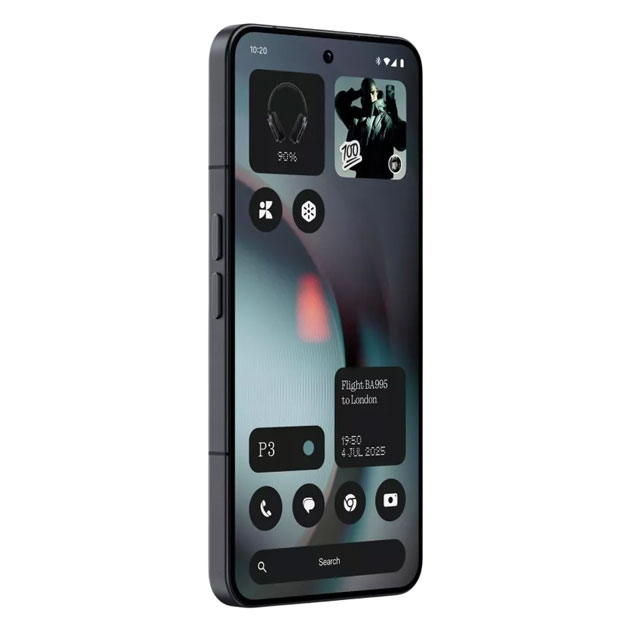
Unbelievably, Nothing didn’t use an advanced panel for its flagship, making the screen on the Nothing Phone (3) a major letdown. This 6.59-inch panel lacks an LTPO backplane, doesn’t have a high PWM dimming frequency, and doesn’t even support Dolby Vision. I honestly don’t even know what to say!
I used a ColorChecker device to test the screen’s color accuracy by measuring 24 reference colors, and the results weren’t pretty at all. The color delta is high across many colors, and the display simply fails to show colors accurately. Even with non-gray colors, the error is massive. I ran this test in both Standard and Alive modes, and unfortunately, the output was disappointing in both scenarios, which is definitely not acceptable for a flagship phone.
Because there’s no LTPO technology, the refresh rate only switches between three static modes: 60, 90, and 120Hz. The refresh rate management is decent because it drops to 60Hz the moment you lift your finger, stays around 90Hz on Instagram, and gives you the full 120Hz in the user interface for smooth scrolling. But man, at this price point, I absolutely expected an LTPO panel.
As for brightness, I tested it out in a few different scenarios and realized that the 4500 nits number Nothing claims is pure marketing fluff and not real. That said, it’s still bright enough to give you excellent readability under direct sunlight.
The PWM dimming frequency is claimed to be 960Hz, which my testing confirmed, but that only applies when the brightness is above 50%. When you drop the brightness, a very low baseline frequency kicks in. This means that at night or in low-light environments, it’ll definitely cause eye strain for sensitive users. In short, the panel is really bad, and if it weren’t for its good outdoor brightness, I’d call it a total disaster.
Speakers: Loud and Clear
It has dual speakers, one at the bottom and one at the top. The top speaker outputs sound from both the top edge and the front, which helps mask the fact that it’s weaker than the bottom speaker. The volume is great and louder than the market average, and the clarity of the mids and highs is excellent. It does a decent job with bass, but it’s not rich enough to make listening to music super enjoyable, though lowering the volume makes the bass punchier. I can safely say the speakers still lag behind the best in the market.
Battery & Charging: Gets the Job Done
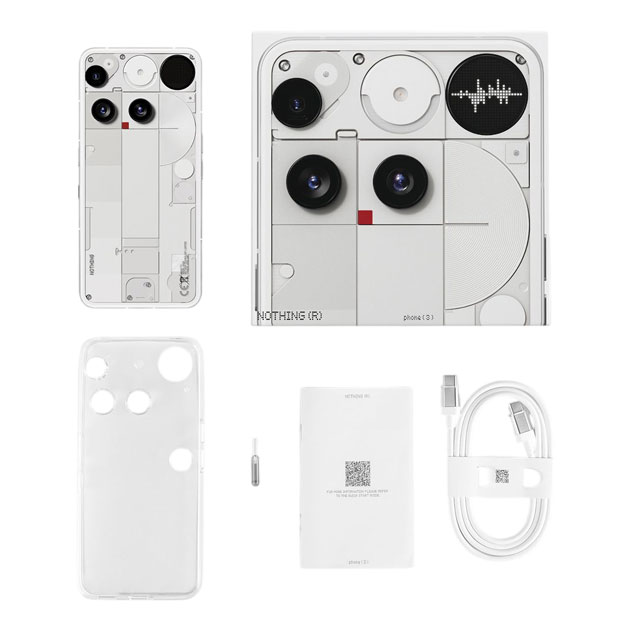
The Nothing Phone (3) has a 5015mAh battery, which isn’t considered a massive capacity. There’s no charger in the box either, so you’ll have to buy one separately. It supports 65W wired charging, 15W wireless charging, and 5W reverse wireless charging.
During my heavy 3.5-hour test, it drained a total of 30% battery. Interestingly, despite the basic refresh rate setup, its power consumption during web browsing and watching videos is actually quite good. The battery life is solid overall as long as you don’t push it with heavy tasks, because heavy usage makes the battery drain fast. But for daily use, it easily lasts a full day, and I was happy with it.
Chipset: Powerful but Limited!
Nothing went with the Snapdragon 8s Gen 4 chipset for the Nothing Phone (3), which is modern and powerful, running Nothing OS 3.5 based on Android 15. But my honest take? Nothing has limited this chipset, and that’s the exact reason why it stays so stable.
I tested Call of Duty for an hour, which isn’t even a super heavy game graphically, and after about 20 minutes, the phone started stuttering and experiencing severe frame drops, like dipping from 90 down to 80FPS. Turning on Performance Mode didn’t fix it either. I think Nothing utilized the power of this chipset more for AI features and image processing rather than gaming, so if you’re buying this phone specifically to game, it’s not for you.
Camera: Exceeding Expectations by Day, Average at Night
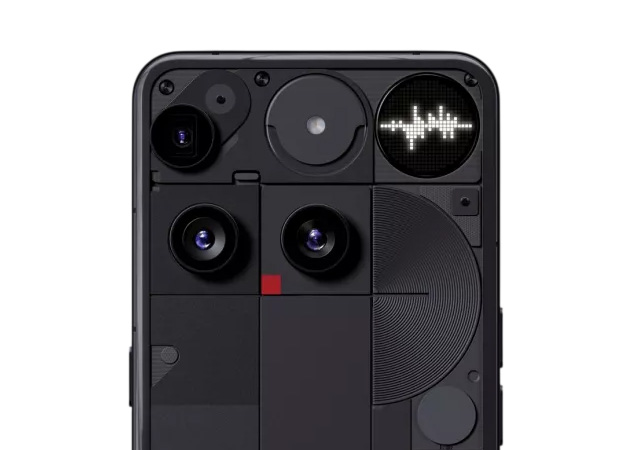
On the back of the Nothing Phone (3), there are three 50MP cameras consisting of a main shooter with an f/1.7 aperture and a 24mm focal length, an ultrawide with an f/2.2 aperture and a 15mm focal length, and a periscope telephoto with 3x optical zoom, an f/2.7 aperture, and a 70mm focal length.
The main and telephoto cameras have autofocus, but the ultrawide doesn’t, which is a downside. The selfie camera is also a 50MP Samsung JN1 sensor with an f/2.2 aperture, and unfortunately, it lacks autofocus too.

The main camera produces photos during the day that look very clean and natural at first glance, whether you’re shooting normally, at 2x zoom, or in full resolution. The colors are incredibly accurate, and the white balance is flawless 95% of the time.

The dynamic range seems good initially, but when you look closer, you notice the processing algorithm struggles to keep highlights from blowing out by literally painting over them. This technique feels more like a mid-range phone than a flagship, though average users won’t notice it. Details are excellent in normal mode and 2x zoom, but in full-res mode, there’s a blurriness across the entire image, making it feel mostly like a marketing gimmick.

Night photography keeps the colors and white balance just as accurate as daytime shots, and the brightness level is great thanks to the f/1.7 aperture. Sharpness is slightly lower than daytime but still excellent, and Night Mode significantly boosts details. The camera also responds incredibly well to manual settings. The main camera outperforms expectations 90% of the time.
Video recording maxes out at 4K, and the overall quality is good. Colors look natural and the dynamic range is awesome, but the sharpness doesn’t match the best phones on the market. It struggles a bit when trying to focus on tiny subjects. Stabilization is excellent during the day, but at night, sharpness drops and the stabilization gets limited, meaning you’ll see a lot of screen jitter when running or shooting inside a moving car.

The ultrawide camera actually blew past my expectations for daytime shooting! Color accuracy is spot on 70% of the time, even though its white balance is weaker than the main camera and sometimes shows a slight yellow tint. The dynamic range is fantastic, and I didn’t see any highlight clipping. The amount of detail even in complex scenes completely surprised me. The algorithm tries to reconstruct distant objects, which doesn’t look entirely real but gets pretty close. However, details turn mushy here too when shooting in full resolution.

For night photography, the ultrawide delivers pleasing photos with great brightness. Even though the aperture is narrower, the smart algorithm removes noise without destroying the textures. That said, the dedicated Night Mode doesn’t make much of a difference, and it doesn’t perform professionally in manual settings because it relies too heavily on ISO.

Ultrawide video recording gets a passing grade for color and white balance. However, in bright outdoor lighting, the inferior sensor causes it to oversaturate, creating a white halo around subjects that ruins the sharpness. You can also spot noise in darker areas even during the day. On the bright side, the electronic stabilization cancels out shakes even in the roughest conditions. At night, ultrawide video performance is better than expected, and the sharpness is acceptable.

The telephoto camera delivers natural colors, accurate white balance, and impressive dynamic range during the day. Details stay perfectly sharp at 3x and 6x zoom, and the quality is surprisingly awesome even at 10x zoom. It can go up to 60x zoom where AI simulates textures, and while the result looks artificial, it’s still usable.
There’s one issue that becomes obvious once you crop into a photo, which happens when you shoot a white subject under direct sunlight. Because of the cheap, low-tier lens, the sensor suffers from light saturation, causing a blooming effect where a white halo appears around the subject, and this can’t be fixed with a software update.

For night photography, the colors are good but details drop, though noise is kept under control. Night Mode doesn’t offer a noticeable boost. Overall, it lags noticeably behind rival flagships at night. You can also take macro shots with this lens, and they look spectacular, though it occasionally gets confused when separating the subject from the background.
Telephoto video quality during the day is acceptable, but it has a tiny yellow tint, and that blooming saturation issue ruins the fun here too, making the sharpness less than ideal since cheaper competitors do a better job. The focus is good, but stabilization only works well when you stand still or move very slowly, as sudden movements will make the footage choppy. At night, it behaves pretty much the same as the day, and the smallest shake makes the video look frantic.

In Portrait Mode, subject separation from the background is accurate most of the time. Skin tones look natural, but that white halo pops up around the subject under bright light. If you try to shoot moving subjects like pets or a playful cat, it completely fails to detect and separate the background properly.

The selfie camera on the Nothing Phone (3) delivers incredible quality in natural daylight, offering a natural white balance and excellent color accuracy. Details are flawless even at a 100% crop and in 50MP mode.

Selfie video recording is also great during the day, though the stabilization takes a slight hit when shooting in 4K. At night, the image looks a bit darker than its competitors, but noise is managed really well and stays clean, though walking will make the video look jittery. Honestly, this selfie camera is easily one of the phone’s biggest strengths.