The Samsung Galaxy A26 is a real mixed bag. On one hand, it’s got all the features of a solid mid-range phone, but on the other hand, Samsung made a few weird decisions that really caught me off guard. I’m going to break down everything about this phone, from the design and display to the cameras, performance, and battery life. We’ll figure out if spending your money on this budget phone actually makes sense in the end. So stick around for my honest review of the Galaxy A26.
Design & Build Quality
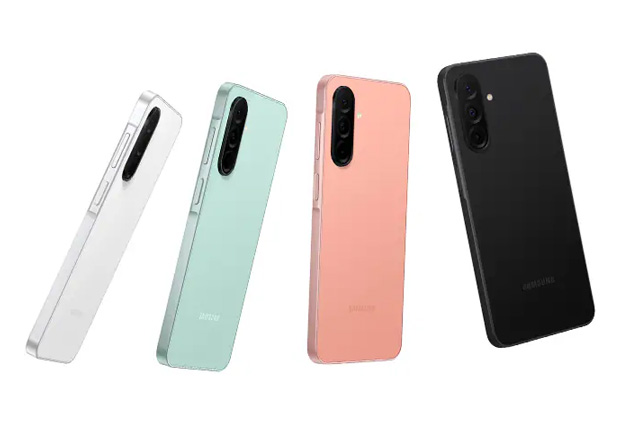
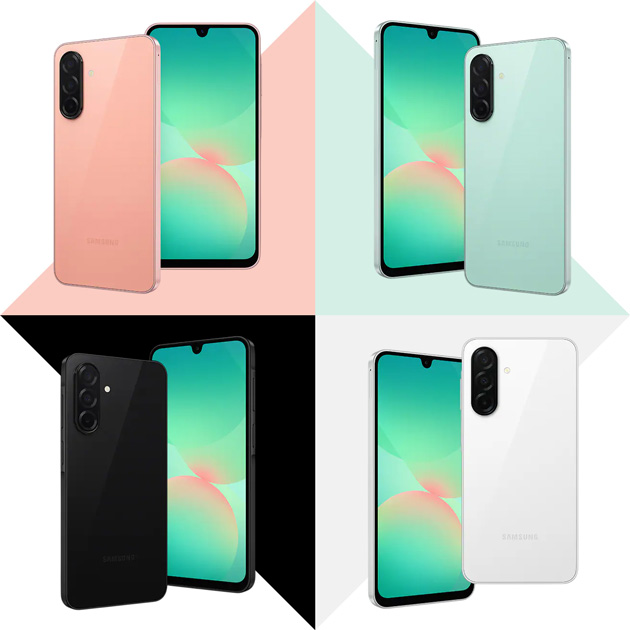
Samsung used the exact same design language for the Galaxy A26 that we saw on the Galaxy A36 and A56. You can get A26 in four colors: Black, White, Mint, and Peach Pink. I have the black version here for the review. Its back panel is like a mirror; you can literally see your face in it. Plus, you just have to walk past it and your fingerprints are all over it.
The frame is made of plastic. On the right side, the power and volume buttons sit on a raised area that Samsung calls the Key Island. At the bottom, you have the Type-C port, speaker, and microphone. The 3.5mm headphone jack is gone, even though the previous generation had it. The left side houses the SIM tray, which supports two SIM cards at the same time or one SIM and a microSDXC card. The top only has the secondary mic.
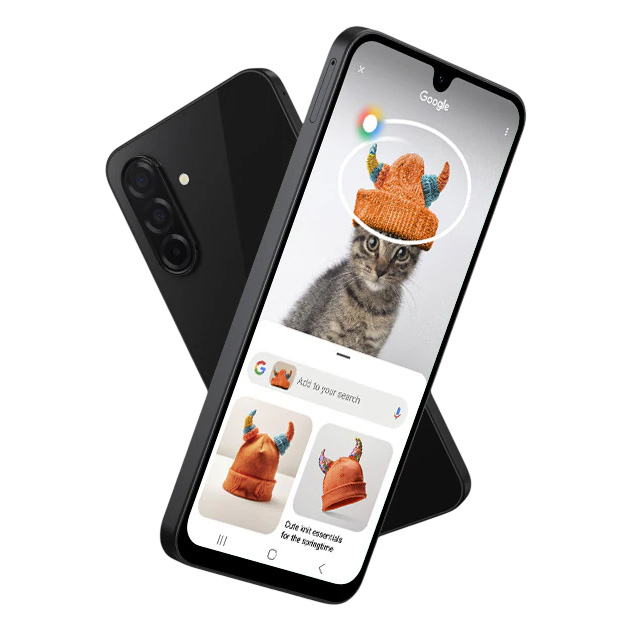
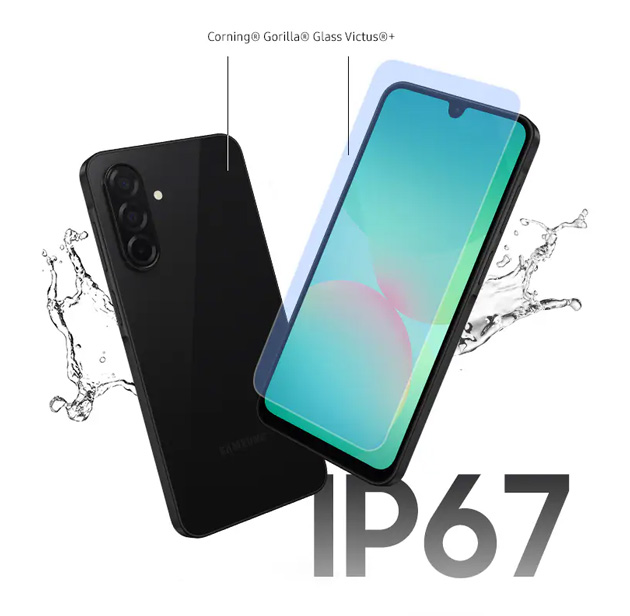
I already told you about the back panel design, it looks exactly like a mirror and is protected by Gorilla Glass Victus+, which is really good for this price range. The camera layout is exactly like the A36 and A56, but there is one positive thing I really love about it. The camera bump is glued tight to the back panel, so no dust gets under it. In my Galaxy A56 review, I mentioned there was a gap under the camera bump that collected a lot of dirt and dust.
On the front, the A26 screen is also protected by Gorilla Glass Victus+, but when you turn the screen on, it’s a huge letdown. You know why? Because the bezels, especially the bottom chin, are super thick. Even worse, the selfie camera is inside a waterdrop notch.
Honestly, what can I even say to Samsung for making a phone in 2025 with a waterdrop notch and huge bezels? If someone didn’t know the release year, they’d think this phone came out 7 years ago. Putting a waterdrop notch on the Galaxy A16 is fine, but you really shouldn’t have done it here. Anyway, let’s move on and talk about how it feels in the hand.
At 7.7mm thick and weighing 200 grams, the Galaxy A26 is 0.6mm thinner and 3 grams heavier than its predecessor. It isn’t super comfortable to hold, but it isn’t terrible either. It’s somewhere in between.
This phone has IP67, so it’s water-resistant, but like I’ve said a bunch of times, just because it’s water resistant doesn’t mean you should take it in the shower or the pool every time.
So far, I can say the build quality of the Galaxy A26 is fantastic for the price, but those thick bezels and that waterdrop notch really ruin the vibe.
Display & Audio

Samsung has used a 6.7-inch 120Hz Super AMOLED panel for the Galaxy A26. I tested the color accuracy of this screen on different modes. I noticed that it displays vibrant, punchy colors, but the color accuracy itself isn’t great.
As for the refresh rate control, it has two modes: High and Standard. Standard gives you 60Hz, and High gives you 120Hz. On High mode, the screen is basically always stuck at 120Hz. In different apps or when you stop touching the screen, it doesn’t drop down to 60Hz, it just stays at 120Hz. It only drops to 60Hz in a few specific apps like the camera. You definitely won’t find any pro-level refresh rate control here.
Talking about the brightness, if you’re indoors on manual mode, you won’t need to max it out at all. Keeping it at 60 or 70 percent is plenty. But outdoors, the max brightness hits 800 nits. The brightness and readability are okay outdoors, meaning you can see what’s on the screen, but under direct sunlight, it gets pretty hard to see. You’ll have to use your other hand like an umbrella over the phone to read anything.
I should also mention the PWM dimming frequency is low, and it’ll definitely bother you if you have sensitive eyes. My eyes aren’t super sensitive, but even my eyes started hurting when working with this phone at night with the brightness turned down.
Overall, the Galaxy A26’s display is just average and there’s no real winning feature here. I can confidently say its direct competitor, the Redmi Note 14 4G, costs less but has a screen that’s two levels better. I’ll leave it up to you to decide which one to pick.
The A26 only has a single speaker. Considering it’s just one speaker, the volume and quality are acceptable. But it has no bass at all and is mostly just good for hearing your ringtone and maybe casually listening to a song every now and then. The biggest issue is its placement. It’s on the bottom right, so when you hold the phone horizontally to play games, your finger covers it completely mutes the sound!
Performance
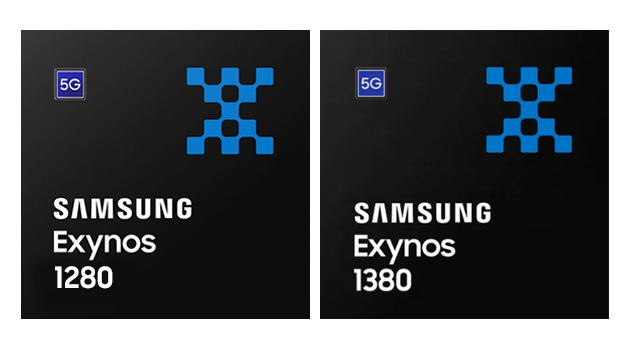
For the hardware, we get a processor we’re already familiar with. Samsung used the Exynos 1380 for the international version of the Galaxy A26, and the Exynos 1280 for the Latin American market. I have the international version with the Exynos 1380 chip right now.
This chip was previously on the A54, then moved to the A35, and now it’s been passed down to the A26. For everyday tasks, the UI performance is good but not great. Why not great? Because when I was gaming and the phone got a bit warm, it would stutter right after I exited the game. Switching from one app to another caused some lag.
But how is the Galaxy A26 for gaming? I installed PUBG Mobile, Call of Duty, Delta Force, and CarX Street on it. It runs PUBG and Call of Duty at 60fps, and honestly, the performance is solid. It can run Delta Force at a maximum of 60fps, but during my gameplay, I never saw it go above 50fps. Still, the performance was really good. As for CarX Street, it maxes out at 30fps and is full of lag. Honestly, just erase the idea of playing CarX Street on this phone from your mind.
All things considered, the Galaxy A26 processor genuinely surprised me. I have to admit that compared to its rival, the Redmi Note 14 4G, the A26 performs way better in games. I was honest when I said the screen isn’t great, but in this department, the Samsung takes the win.
Battery & Charger
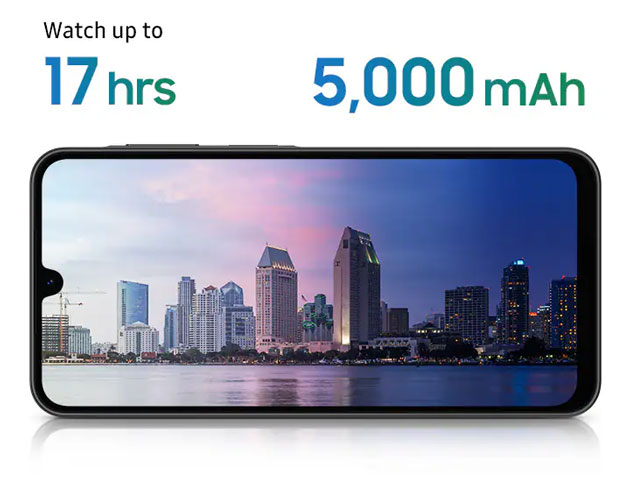
The battery capacity of the Galaxy A26 is still 5000mAh, exactly like the A36 and A56, and the battery life is completely average. With moderate to heavy use, it might barely last you a full day.
In my tests, one hour of playing Call of Duty drained the battery by 18%, one hour of Delta Force took 17%, and watching YouTube for an hour dropped it by 7%.
There’s no charger in the box, so you’ll have to buy an adapter first. It supports a maximum of 25W, which takes about 90 minutes to fully charge the phone.
Camera
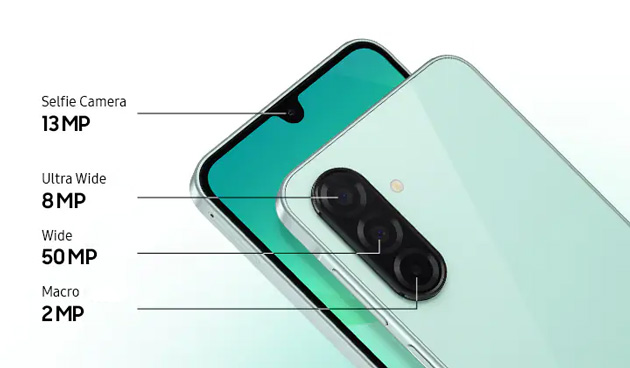
We have the usual Samsung mid-range setup here. On the back of the Galaxy A26, there are three cameras: main, ultrawide, and macro.
The main camera uses a 50MP Samsung ISOCELL JN1 sensor. It has a 27mm lens with an f/1.8 aperture, supports PDAF, has optical image stabilization, and can shoot 4K video at 30fps.
The ultrawide camera is an 8MP Samsung ISOCELL 4HA sensor covering a 120-degree field of view with an f/1.8 aperture. It has fixed focus and shoots up to 1080p video at 30fps.
There’s also a 2MP macro camera, which is so awful that I took three photos with it and then decided to never use it again or even talk about it.
The selfie camera has a 13MP Hynix Hi-1339 sensor with an f/2.2 aperture. It records video up to 1080p at 30fps. Now, let’s talk about the photo and video quality.

Ultrawide photos look very appealing and eye-catching at first glance. The color accuracy leans a bit warm, but I actually think it makes the shots look better. The dynamic range is excellent in most conditions, except when shooting directly into the sun, where it drops a bit. You can spot noise almost everywhere in the frame. The details in the center are acceptable and good for the price, but things get messy and soft around the edges.
Photos from the main camera, both in the default mode and the 50MP mode, have very good color accuracy and white balance. Colors look very natural. The dynamic range is great most of the time, except under direct sunlight. Noise is lower compared to the ultrawide, but it’s still noticeable in most parts of the image.
Detail levels are good in the default mode, handling both close and distant subjects well. However, in the 50MP mode, only close-up subjects look detailed, while objects further away end up looking soft and watercolor-like. Overall, I preferred shooting in the main camera’s default mode.
When zooming with the main camera, photos look good up to 2x, holding enough detail for minor cropping. You can still use the 4x zoom shots, but you definitely can’t zoom in any further on them. The 10x zoom is basically useless.
Portrait photos with the main camera only work at 1x. The color accuracy is good. The dynamic range is acceptable under ideal lighting, but if you take a portrait under direct sunlight, the results won’t look good. The level of detail is surprisingly good for the price, and it separates the subject from the background with very few mistakes. Honestly, the portraits it takes are really nice.

As for the selfie camera, I can confidently say the photos are either the best or definitely among the best in this price range. Color accuracy and dynamic range are good, noise is low, and it captures a ton of detail. It’s really fantastic.
Selfie portraits are great across the board too. It does make a few minor mistakes when separating the subject from the background, but that’s totally normal for a phone at this price point.
The 1080p 30fps videos from the ultrawide camera are very basic and only really good for viewing on the phone’s screen. It boosts the colors a bit too much, and the dynamic range is pretty bad. But the stabilization actually does a good job.
The main camera’s 4K 30fps videos have great color accuracy. The dynamic range could be better, but it’s acceptable. Focusing is smooth and mostly reliable, and the sharpness is really good for a phone in this bracket. The main issue is that the stabilization doesn’t work well at 4K.
Selfie videos max out at 1080p 30fps. Color accuracy and dynamic range are good, and the sharpness is really nice despite being just Full HD.
Now let’s talk about low-light photos and videos. Ultrawide night shots have decent color accuracy and good brightness if the area has some light. But there’s noise everywhere, and the detail level just isn’t good. Turning on Night Mode only makes the photo slightly brighter. It still lacks detail and has noise.
Main camera night shots without Night Mode boost the colors a bit, but the brightness is very good. There’s less noise than the ultrawide, but it’s still there. Details are good for the price. With Night Mode on, it handles light sources much better, but the noise and detail levels stay exactly the same.
Selfie night photos, whether you use Night Mode or not, are nowhere near as good as the daytime shots.
Ultrawide videos at night are so bad they aren’t even worth discussing. The only good thing about the main camera’s night videos is the color accuracy and brightness. Other than that, the sharpness is terrible and there’s a massive amount of noise.
If there’s decent light, the selfie camera can shoot a night video that just barely gets the job done.